
News · · Updated
How to judge a mobile clinic program.
What a ministry of health should ask of a regional or national mobile clinic program, and five measures to judge it on.
A proposal for mobile clinics across a region or a country is easy to write as a list of vehicles: how many units, which types, what each one costs. At that scale the list answers the wrong question. The investment is in a health service that works across a defined geography. Mobile clinics are one way to deliver it.
The buyer is usually a ministry of health or a regional health authority, with its finance ministry and funding partners beside it. A large hospital group can be in the same position. The health authority defines the service, and the others decide whether it is worth paying for. A proposal has to tell them which communities will be served, with which services, how often, and what it costs to keep going.
Why mobile.
There are three reasons to choose mobile capacity. It brings selected services closer to communities that are far from a hospital or poorly served by one. It adds capacity while permanent facilities are planned and built. And it moves when demand changes, so a unit that is no longer needed in one district can work in another.
The word “selected” matters. Services that can be scheduled, such as screening, imaging, primary care, dental care and dialysis, suit a clinic that travels. Patients who need more than the unit offers have to be sent on, which is why the program depends on the hospitals behind it.
Six things the vehicles depend on.
So the vehicles are only part of the design. The program has to connect them with six other things.
- Staffing. Clinicians, technicians and drivers rostered for every scheduled day, with cover for leave and turnover.
- Diagnostics. A laboratory for the samples taken on board, and someone to report the images.
- Supplies. Medicines, consumables and reagents restocked on the route’s schedule, before they run out.
- Maintenance. The vehicle and the medical equipment, with a plan for the days a unit is off the road.
- Digital records. The visit written into the same patient record the hospital uses, so a result or a referral does not travel on paper in the patient’s pocket.
- Referral hospitals. A named hospital that has agreed to receive the patients sent on, and has the appointments to do so.
Records and referral hospitals deserve the most attention, because they decide what happens to the patient after the visit. In Gabon’s national program, four hospitals and six health centers went live on GreenCube, our hospital information system, between September 2024 and June 2025, among them CHU Mère-Enfant Fondation Jeanne Ebori in Libreville. That was a hospital software rollout, not a mobile clinic program, but it is the kind of shared record a mobile program should write into.
Five measures.
A program designed this way can be judged on what it does for patients. We would ask five questions of any proposal.
- Population reached. How many of the people the program was meant to serve were seen, district by district. Days deployed and distance driven describe activity. They say nothing about who came.
- Completed care. Whether the patient got what they came for, a result delivered or a course of treatment finished, beyond a visit logged.
- Referral follow-through. Of the patients sent on to a hospital, how many arrived and were seen.
- Utilization. How much of each unit’s scheduled capacity is used. A unit that is half empty is on the wrong route, on the wrong schedule or offering the wrong service, and because it is mobile that can be corrected.
- Full cost. Staff, supplies, fuel, maintenance, software and equipment replacement over the life of the program, set against the first four measures. The purchase price of the units is one line in that total.
None of the five can be reported unless the records system captures them. That is one more reason to specify records at the start, and to write the measures into the contract. Talk to us about a program →
What Vatoris supplies.
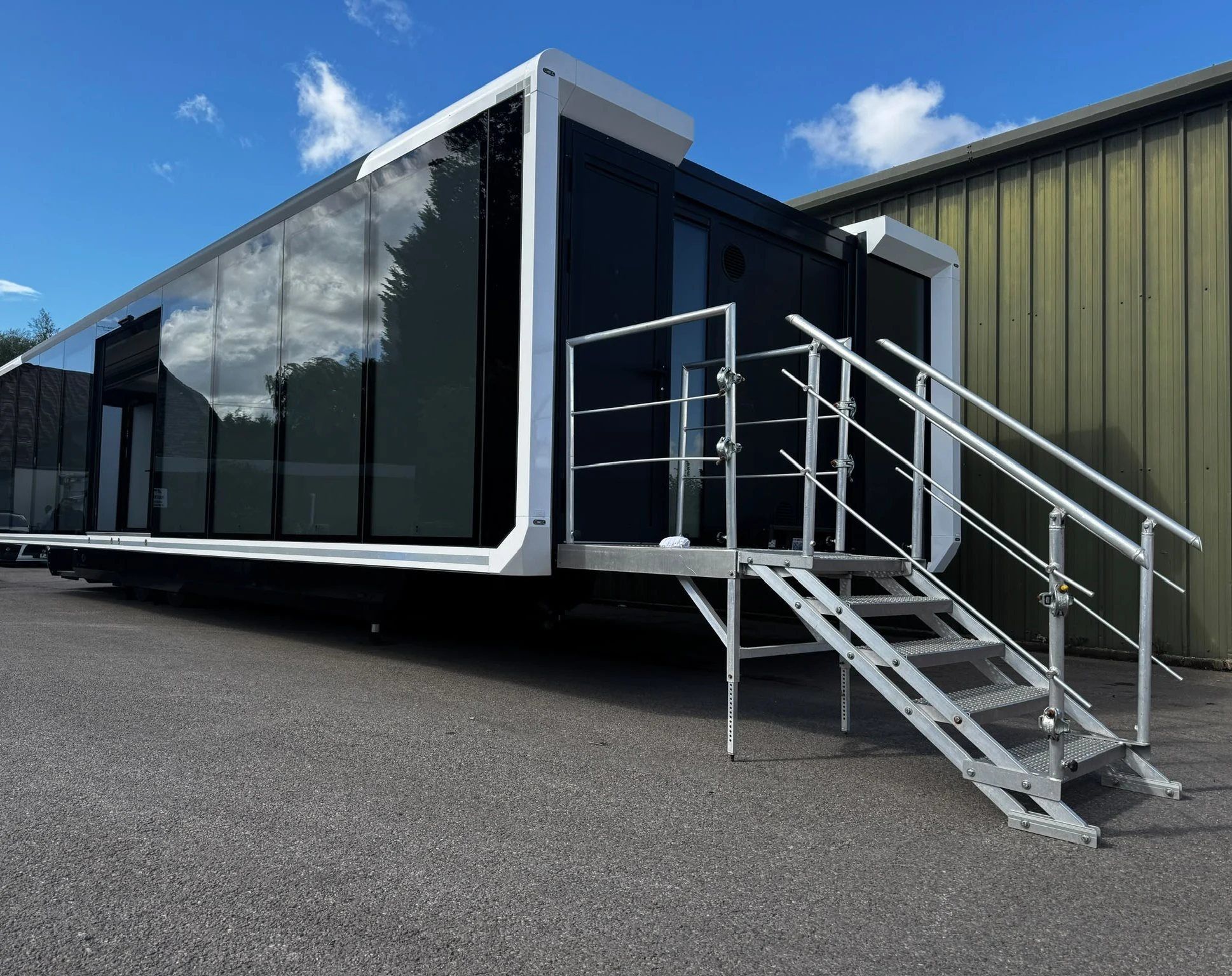
The platform is already on the road. In September 2026 we delivered an expandable unit on the same 45-foot platform to Norfolk, Virginia, fitted for motorsport. Vatoris has also supplied mobile primary care units in the United Kingdom.
Vatoris supplies mobile clinics for imaging, clinical care, diagnostics and screening on that one 45-foot expandable trailer platform. They can be bought, leased, rented or run as a Vatoris-operated service, with staffing, equipment, locations and responsibilities agreed for the program. Where a program needs beds as well, we supply deployable hospitals. GreenCube runs in the cloud, on your own servers, or both.
For governments, we structure the financing of large programs with major banks, backed by export credit agencies. The governance page sets out how Vatoris is incorporated, registered and contracted.